
Business Cards in 2026: Are They Still Worth It? (Spoiler: Yes)
Business Cards in 2026: Are They Still Worth It? (Spoiler: Yes)
Quick Answer Business cards are not dead. In South Africa, where networking events, markets, trade shows, and face-to-face relationship building are how business genuinely gets done, a quality business card remains one of the highest-ROI marketing tools available. 350gsm, full-colour CMYK, with a gloss or matt laminate — ordered from shop.webprinter.co.za for under R300 for 100 cards. |
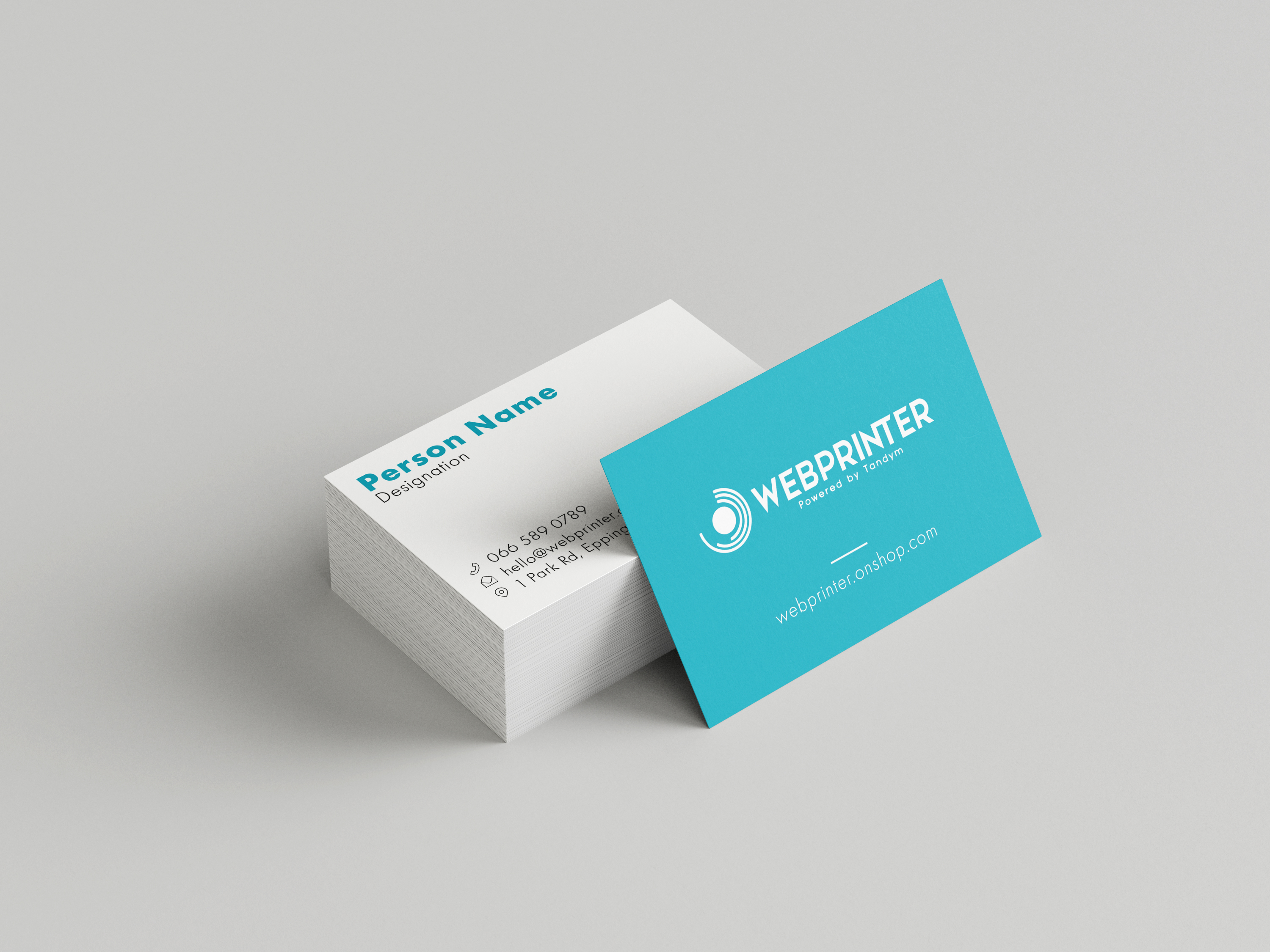
Every few years someone publishes a think-piece declaring business cards dead. LinkedIn, they say. QR codes, they say. Just tap phones together like futuristic penguins.
Then you go to a trade show. A networking breakfast. A braai where two business owners end up talking shop for an hour. And when that conversation reaches its natural end, one of them says: 'Do you have a card?'
The person who hands one over looks like a professional. The person who pulls out their phone to exchange contacts on the spot looks like they forgot something. That difference — imperceptible at the time, but real — is the value of a business card in 2026.
Why Physical Cards Still Work in the SA Market
South Africa's SME economy runs on relationship trust. People do business with people they know, or with people who've been referred by someone they trust. The business card is the physical artefact of that moment of trust — it's what you leave behind so the conversation can continue.
A well-made card sits on a desk. Goes into a wallet. Gets passed on. Gets found months later in a jacket pocket. A LinkedIn connection request gets accepted and immediately forgotten in a feed of 2,000 posts. These are not equivalent marketing actions.
💡 The SA-specific angle South Africa has a strong culture of word-of-mouth referral — especially in professional services, trades, and community business. Business cards facilitate this. Someone hands your card to their contact. That contact calls you. That call didn't come from an ad — it came from a physical piece of paper with your name on it. |
What Makes a Business Card Actually Good
A bad business card is worse than no card. It creates the impression you cut corners — and people extend that inference to your business. Here's the difference between good and forgettable:
Paper weight | 350gsm minimum. 400gsm is noticeably more premium. Anything lighter feels flimsy and marks easily. |
Finish | Gloss laminate for vivid colour and high impact. Matt laminate for a sophisticated, professional look. |
Design | One side: logo, name, title, phone, email, website. The back: something that reinforces your brand — a QR code, a tagline, your social handles, a clean visual. |
Font size | Minimum 7pt for contact details. Your name should be immediately readable — it's the most important element on the card. |
Bleed | 3mm bleed beyond the card edge. All content 3mm inside the trim line. These are non-negotiable for a professional result. |
How Much Should You Spend?
Less than you probably think. 100 double-sided business cards on 350gsm with gloss lamination from Webprinter cost under R300, with affordable delivery to any address in South Africa. 250 cards bring the per-unit cost down further. 500 cards — enough to last most professionals 12–18 months — remain well under R1,000.
The question to ask is not 'can I afford business cards?' It's 'can I afford not to have them?' One new client from a referral via a card covers the cost of your entire print run, and then some.
The One Mistake That Kills a Good Card
Overcrowding. The instinct is to put everything on — your tagline, all your services, your WhatsApp, your Instagram, your physical address, a photo. Resist this. Your card is an invitation to continue a conversation, not a CV.
Name, title (in plain language — not 'Director' if that tells the reader nothing), one phone number (your WhatsApp business number if you use it), email, and website. Your logo. That's it. Use the back for personality — a QR code to your portfolio, a strong tagline, a clean brand visual. The front stays focused.
A Word on Double-Sided Cards
Single-sided cards leave real estate on the table. The back of your card is a free canvas — and almost no extra cost. A QR code linking to your website or portfolio on the back of a business card is genuinely useful, particularly at expos, markets, and professional events. Keep the QR code at least 25x25mm so it scans reliably.
Order your business cards at shop.webprinter.co.za — 350gsm or 400gsm, your choice of finish, full-colour CMYK. Affordable delivery nationwide. Under R300 for 100 cards. |
Frequently Asked Questions
What is the standard business card size in South Africa?
90mm x 50mm — the same as a credit card. This is the size every wallet slot, card holder, and card exchange in the world is built around. Stick to it. Custom sizes are possible but rarely necessary and can cause practical problems for the person receiving the card.
How many business cards should I order?
250–500 cards are the practical starting range for most South African professionals. If you attend regular networking events, trade shows, or expos, order 500. If your contact details are stable and your design is unlikely to change for 12 months, 500 cards at a lower per-unit cost is the smarter order.
Can I use Canva to design my business cards?
Yes — and most people do. Canva's business card template sets the dimensions correctly. When you're ready to download, choose 'PDF Print' — this ensures the file exports in CMYK with the correct resolution for professional printing. Then upload to shop.webprinter.co.za for your free artwork check and production.
What finish should I choose for my business cards?
Matt lamination for professional services, law, finance, and corporate roles — it's sophisticated and reads as considered. Gloss lamination for design-led, colourful brands where vibrancy matters.
How long does business card printing take?
Standard turnaround from Webprinter is 3–5 business days from artwork approval, with affordable delivery nationwide. Cape Town addresses from our Epping production facility often arrive at the faster end of that window.